I have an co-edited collection entitled Young Adult Gothic Fiction: Monstrous Selves, Monstrous Othersabout to be published in June by University of Wales Press. It's packed with wonderful essays from children's literature friends old and new. I've written a chapter with my co-editor Kristine Moruzi on the intersection of fairy tale with YA Gothic, which I think is one of the first takes on the intersection of these three areas.
This collection is the first to focus exclusively on twenty-first-century young adult Gothic fiction. The essays demonstrate how the contemporary resurgence of the Gothic signals anxieties about (and hopes for) young people in the twenty-first century. Changing conceptions of young adults as liminal figures, operating between the modes of child and adult, can be mobilised when combined with Gothic spaces and concepts in texts for young people. In young adult Gothic literature, the crossing of boundaries typical of the Gothic is often motivated by a heterosexual romance plot, in which the human or monstrous female protagonist desires a boy who is not her ‘type’. Additionally, as the Gothic works to define what it means to be human – particularly in relation to gender, race, and identity – the volume also examines how contemporary shifts and flashpoints in identity politics are being negotiated under the metaphoric cloak of monstrosity.
TABLE OF CONTENTS
1. Introduction: Kristine Moruzi and Michelle J. Smith
Section 1: Genre Trouble: Gothic Hybrids
2. Zombies Vs Unicorns: An Exploration of the Pleasures of the Gothic for Young Adults – Patricia Kennon
3. Genre Mutation and the Dialectic of YA Gothic Dystopia in Holly Black’s The Coldest Girl in Coldtown – Bill Hughes
Section 2: Rewriting the Historical Gothic
4. ‘Vanguard taste and fashion spirit’: Feminist Responses to Twenty-First Century, Western Zeitgeist in Vampire Romeo and Juliet texts – Sarah Olive
5. The Pre-Monstrous Mad Scientist and the Post-Nerd Smart Girl in Kenneth Oppel’s Frankenstein Series – Sean P. Connors and Lissette Lopez Szwydky
6. Rock Star Rochester and Heartthrob Heathcliff: The Problematic Redemption of the Byronic Hero in Recent Young Adult Retellings of Brontë Novels – Sara K. Day
Section 3: Gothic Places
7. Monstrous Islands: Spatiality and the Abjection of Motherhood in Gothic Young Adult Fiction – Cecilia Rogers
8. Adolescence Adrift: The Lost Child in Contemporary Australian Gothic YA Fiction – Adam Kealley
Section 4: The Human and the Non-Human
9. Accepting Monsters: The Visual Gothic in I Kill Giants and A Monster Calls – Debra Dudek
10. Unhuman Entanglement: Onto-Ethics and the Fiction of Frances Hardinge – Chloé Germaine Buckley
11. Black and White and Read All Over: Miss Peregrine’s Peculiar Children, Gothic Imagery and Posthuman Publishing – Jen Harrison
Section 5: Gothic Femininities
12. Testimony from Beyond the Grave: Comparing Girls’ Narratives of Sexual Violence and Death in Gothic Fiction – Lenise Prater
13. Young Adult Gothic Fairy Tales and Terrifying Romance – Michelle J. Smith and Kristine Moruzi
In the 19th century, a range of thinkers attempted to pinpoint exactly what it was that made a woman beautiful. Newly popular women’s magazines began to promote ideas about the right behaviours, attitudes, and daily routines required to produce and maintain beauty.
The scientific classification of plants and animals - influenced by Charles Darwin - also shaped thinking about beauty. It was seen to be definable, like a plant type or animal species. Increasingly, sophisticated knowledge of medicine and anatomy and the association of beauty with health also saw physicians weigh into the debate.
A look at three significant books that focused on beauty shows several influential ideas. These include the classification of distinct beauty types, the perception of “natural” beauty as superior to the “artificial”, and the eventual acceptance of beauty as something that each woman should try to cultivate through a daily regimen of self-care.
Classifying beauty types
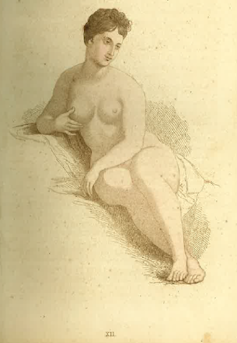
‘The three species of beauty as affecting the head and face’ in Alexander Walker’s Beauty;
Illustrated Chiefly by an Analysis and Classification of Beauty in Woman (New York: William H. Colyer).
Alexander Walker, a Scottish physiologist, wrote three books on the subject of “woman”. The first was Beauty; Illustrated Chiefly by an Analysis and Classification of Beauty in Women. Here, Walker focuses on women’s beauty because he suggests it is “best calculated to ensure attention from men”. He assumes that men have the power to choose sexual partners in a way that women do not, therefore men have a crucial responsibility “to ameliorate the species”.
Given that one of its key functions is to signal fertility, a woman’s appearance is therefore not a frivolous topic. It is linked to the development of humanity.
Walker defines three types or “species” of female beauty: locomotive, nutritive, and thinking. These types derive from a knowledge of anatomy and each is related to one of the bodily “systems”.
‘Front view illustrating mental beauty’ in
Alexander Walker’s Beauty
The locomotive or mechanical system is highly developed in women with “precise, striking, and brilliant” bodies. The nutritive or vital system is evident in the “soft and voluptuous”. The thinking or mental system is conducive to a figure “characterised by intellectuality and grace”.
Walker’s ideal is the mental or thinking beauty. She has less pronounced breasts and curves and admirable inner qualities that are evident in her “intensely expressive eye”.
Not coincidentally, he understands intelligence to predominate in men. Walker’s ideal thinking beauty is effectively most like his idea of a man in contrast to the locomotive beauty (connected with the lower classes) and the nutritive beauty (primed to have children).
The book proposes ideal measurements for areas such as the forehead and the most distinctive features of the female body. Breasts are viewed as essential to beauty and the ideal they describe is youthful, with “firm and elastic” tissue that forms “true hemispheres in shape”.
Very specific distances between nipples, the collar bone, and between the breasts themselves are specified, setting out perfect proportions.
Brinton and Napheys claim that few European and American women meet these requirements, owing to the “artificial life” adopted in both locations. Controversially, they remark that such breasts do not exist in America, apart from in “some vigorous young country girl, who has grown up in ignorance of the arts which thwart nature”. The idea that beauty was more often destroyed by “artificial” beauty methods than improved by it was predominant.
Personal Beauty promotes a device for improving the shape of the breast through suction because it meets the criteria for “natural” improvement. It is described similarly to breast enlargement pumps that are sold today as an alternative to breast augmentation.
Brinton and Napheys’ reference to the potential of such a device to “restore the organs in great measure to their proper shape, size, and function” suggests they are referring to breasts that may have lost their fullness and symmetry after breastfeeding.
It is unclear how such a device would not only improve the shapeliness of breasts, but also render them “better adapted to fulfil their functions”. However, the notion that function, which is reliant on health, is essential to beauty helps to support a medicalised understanding of the topic.
Beauty destroyed
This emphasis on health contributes to a tendency to focus on the ways that women destroy their own beauty through clothing, cosmetics, or certain types of exercise. A specific target in this book is the wearing of garters below the knee, which the authors claim is the reason why a “handsome leg is a rarity, we had almost said an impossibility, among American women”.
Tightly-laced corsets, sucked-upon lips, and white face powders are frowned upon for potential harms to health. Yet, as doctors, Brinton and Napheys embrace early manifestations of cosmetic surgery, such as the removal of skin that might hang over the eyes.
A significant point in guiding the acceptability of cosmetic usage is whether such a practice appears natural and undetectable. Imitation itself is not described as distasteful, if it can be achieved convincingly, but “the failure in the attempt at imitation” does inspire revulsion.
As such, a wig that meshes with a women’s age and appearance can be acceptable. In contrast, it is “contrary to all good taste” to “give to the top of the head an air of juvenility which is flatly contradicted by all other parts of the person”.
Personal Beauty focuses on preventative measures for retaining beauty and delaying the visible onset of ageing, rather than remedying flaws once they have taken hold. The book ultimately concludes that if all the measures recommended are undertaken, “there will be little need for the purely venal cosmetic arts, such as paint, powder, patches, or rouge”.
Embracing beauty culture
This understanding of cosmetics as pure reflections of vanity and as separate from beauty practices related to health was gradually challenged by women writers towards the end of the 19th century.
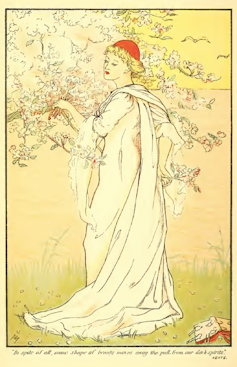
Frontispiece, Mrs H.R. Haweis, [1878] 1883. The Art of Beauty. London: Chatto & Windus.
Eliza Haweis wrote about the decoration and stylistic adornment of the home and body in British magazines and a series of books, the first of which was The Art of Beauty(1878). Its premise is that personal beauty and adornment of the body is of “the first interest and importance” for women.
Many beauty manuals warned against any significant attempts to alter the face or body beyond basic health and hygiene. Such practices, as academic Sarah Lennox suggests, were seen as “objectionable — as a hiding of inner truth”. Haweis, however, encourages young women to enhance their beauty and older women to continue to use methods that “conceal its fading away”.
The methods that Haweis advocates reproduce prevalent ideas found in women’s magazines and beauty manuals that discouraged any visible sign of artifice and which championed the “natural”. Hygienic and cosmetic intervention are framed as exposing or fostering physical qualities as they ought to be seen, or providing a delicate “veil” for flaws, rather than attempting to entirely transform them.
However, Haweis goes further than many beauty advisors at the time. Unlike many male writers, she is not opposed to cosmetics. She likens their use in “hiding defects of complexion, or touching the face with pink or white” to adding padding to a dress, piercing ears, or undergoing cosmetic dentistry.
Eliza Haweis
Part of the reason Haweis supports cosmetics and other methods of improving the appearance is because she observes that ugly people are treated differently.Walker sees beauty as a sign of higher intelligence. Many publications at the time presented a similar line of reasoning in suggesting that mean-spirited and nasty individuals would age horribly.
Haweis, however, is unique in her entertainment of the possibility of ugliness negatively influencing character. She proposes that “an immense number of ill-tempered ugly women are ill-tempered because they are ugly”. She acknowledges that ugliness is in fact an “impediment” and a “burden”, which thereby supports her call to all women to work to improve their appearance.
Beauty today
Our understanding of what makes a woman beautiful is influenced by dominant cultural beliefs and hierarchies. Though Walker’s physiological beauty types were replaced by acceptance of the idea that women can retain beauty into older age or remedy unappealing features, many historic precepts about beauty continue to influence modern beauty culture.
Ideas about “natural” beauty as superior to “artificial” beauty are reflected in cosmetic advertisements and plastic surgery procedures, with a “natural” or “undetectable” look to any product, facelift, or implant being the desired outcome for many women.
Most of all, the idea that beauty is of prime importance to girls and women remains predominant, even as the cultural conditions surrounding marriage, employment, and family have substantially transformed since the 19th century.
Haweis’ ideas about the significance of self-care resonate with contemporary feminists who point to women’s pleasure and empowered use of cosmetics.
We have recently seen the emergence of male beauty bloggers and YouTubers. However, the continued sense that beauty is largely women’s preserve and a unique form of power that requires a continual fight to keep shows how an emphasis on women’s physical appearance is still entwined with gender inequality.
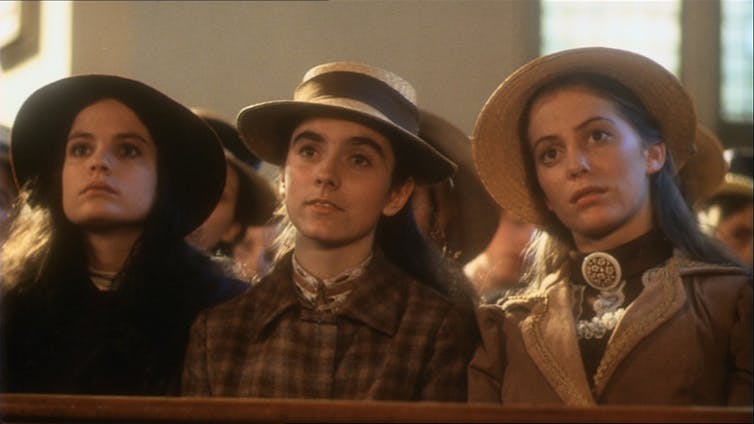
Bruce Beresford's 1977 film, The Getting of Wisdom
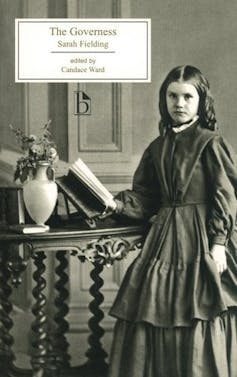
Going to school is one of the few life experiences almost everyone shares. From the time children began to be educated in small groups in Britain, there were school stories in popular culture, beginning with what many consider the first novel for children, Sarah Fielding’s The Governess; or, The Little Female Academy (1749).
The emphasis in early school stories was on moral and intellectual learning, which the reader was supposed to absorb. However, as school became a universal experience, stories about school elevated peer acceptance, sporting success, and friendships to the main sources of drama. This has remained true from the crucial cricket match of Tom Brown’s School Days (1857) to the quidditch tournaments of the Harry Potter series.
School stories appeal to children and adolescents because they represent a world comprised largely of other young people, with adult teachers relegated to the periphery. However, they also mark changes in the kinds of ideals and goals we want young people to aspire towards.
Conformity and obedience were measures of a protagonist’s success in early school stories. However, as the genre has evolved in film and television, school stories have celebrated characters who transgress adult expectations, emphasising the importance of individuality.
Nerds, jocks and popular kids
North American film and television from the 1980s embraced stories about high school in particular, with earnest considerations of the dilemmas faced by teenagers forced into almost familial relationships with each other.
John Hughes’s The Breakfast Club (1985) was among the first films to treat the experience of high school with seriousness and empathy. In what became a template for the genre, it explores the unique forms of social stratification found in schools between the popular kids, the nerds, the jocks, and outcasts who sprinkle dandruff on their artworks.
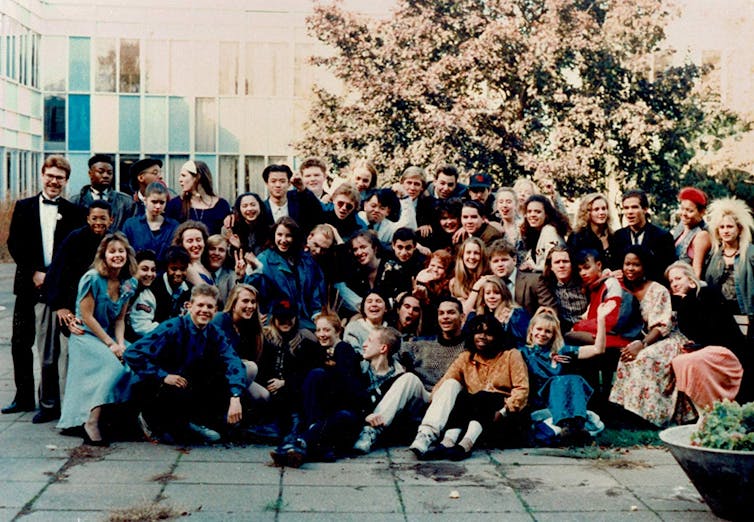
Canadian series Degrassi Junior High
Canadian series Degrassi Junior High (1987-89) and Degrassi High (1989-1991) were pioneering in their focus on teenagers and willingness to confront mature topics including drug use, teen pregnancy, racism, and sexuality. The ultimate dark and vindictive side of school friendships were most memorably fictionalised in 1988’s Heathers, which darkly satirised teen suicide. Reflecting a significant transformation in real-world schools, the recent television reboot of Heathers had its premiere delayed for almost a year because of the Parkland, Florida school shooting.
Some of the longest-running American TV series set in schools in the 1990s nevertheless idealised beautiful, popular, and often wealthy students. Both the Saturday-morning comedy Saved by the Bell (1989-1993) and the prime-time drama Beverly Hills, 90210 (1990-2000) were largely told from the perspective of fashionably dressed and perfectly coiffed characters at the zenith of the social hierarchy.
Outsiders and underdogs
Australian school stories have differed from their British and American counterparts from the outset. Henry Handel Richardson’s classic novel The Getting of Wisdom (1910), which was adapted into a film in 1977, is the story of poor country girl, Laura Tweedle Rambotham, who is sent to an exclusive Melbourne boarding school.
While the usual arc of the school story was to teach the outsider appropriate lessons about how to conform and contribute to school spirit and sporting success, Laura lies in an ill-fated attempt to be liked, cheats to pass her final exams, and finishes school without having found peer acceptance. It is her very inability to change herself to fit stifling gender and class expectations that has made her an enduring and beloved character for the past century.
Read more:
The case for Henry Handel Richardson’s The Getting of Wisdom
Such irreverence toward authority figures is a frequent attribute of Australian stories about school. In its early years, teen soap Home and Away (1988-present) built many dramas around conflict with high-school principal Donald Fisher, who the students privately referred to as “Flathead”.
With conscious efforts to present a grittier and more realistic depiction of school life, Heartbreak High (1994-1999) not only included a cast that aimed to represent Australia’s increasingly multicultural society but depicted teachers as less authoritarian, and heavily invested in their student’s welfare.
In a reworking of the opposition between student and teacher, it has become common for Australian stories about school life to retain a focus on the underdog but to draw out its comedic potential. Hating Alison Ashley (2005), based on the novel by Robin Klein, cast pop darling Delta Goodrem as the beautiful, superficially perfect student, but presents the story from the perspective of friendless hypochondriac Erica Yurken.
Rather than a disciplinarian setting in which the teachers and principal have ultimate control, Barringa East high school exhibits a loss of adult order, with graffiti and rubbish covering the campus.
The film opens with the explanation that three teachers have retired due to the trauma of teaching at the school, with two institutionalised and one escaping to join the Hare Krishnas. While the overall culture of underachieving students allows Erica to shine academically, she does not feel comfortable in herself until she makes an unlikely friend in her imagined rival, Alison. A happy ending for Erica is found not in changing herself and achieving popularity, but in finding a supportive friend to join her outside the mainstream.
The trailer for 2005 film Hating Alison Ashley.
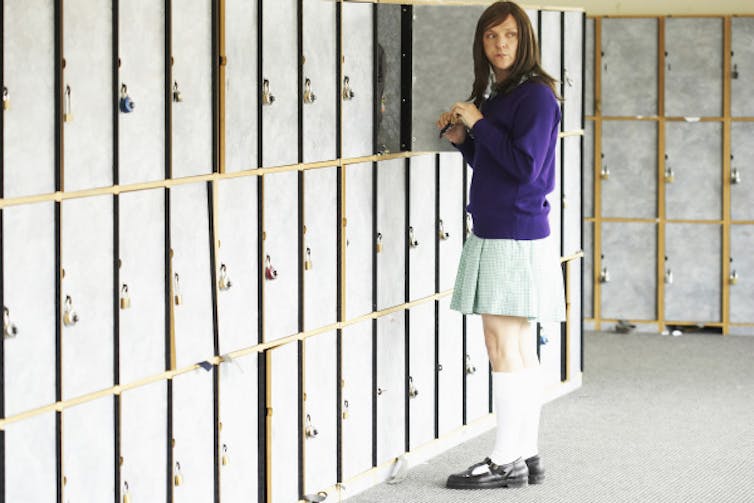
Chris Lilley’s Summer Heights High (2007) at once adopted the perspective of an underdog in the form of Jonah Takalua (a Tongan character controversially played by Lilley), and a queen bee in the form of Ja’mie King, a private school girl “slumming” at a state school.
Rather than glamorising the wealthy, image-obsessed Ja’mie, the series positions viewers to laugh at the shallowness of her manipulations to gain the approval of teachers and the few students she deems worthy of her attention. While many of the teachers at the school do care for student welfare, the infamous Mr G is the ultimate demonstration of the way teachers and authority figures are often depicted as flawed and ineffectual.
Chris Lilley as Ja'mie
Across time, Australian stories about school have more in common with the narratives of outsiders like Napoleon Dynamite than those of inspirational teachers as in Dead Poets Society or the beautiful students of Riverdale.
Attributes such as wealth, attractiveness, and family connections and status often distinguish the protagonists of American and British stories. Similarly, working hard and behaving correctly often brings success and popularity to these characters.
In contrast, Australian stories about school days are more likely to question structures of authority and social status. And anyone who wants to suck up to the popular kids or teachers can just, in the words of the students of Heartbreak High, “Rack off!”
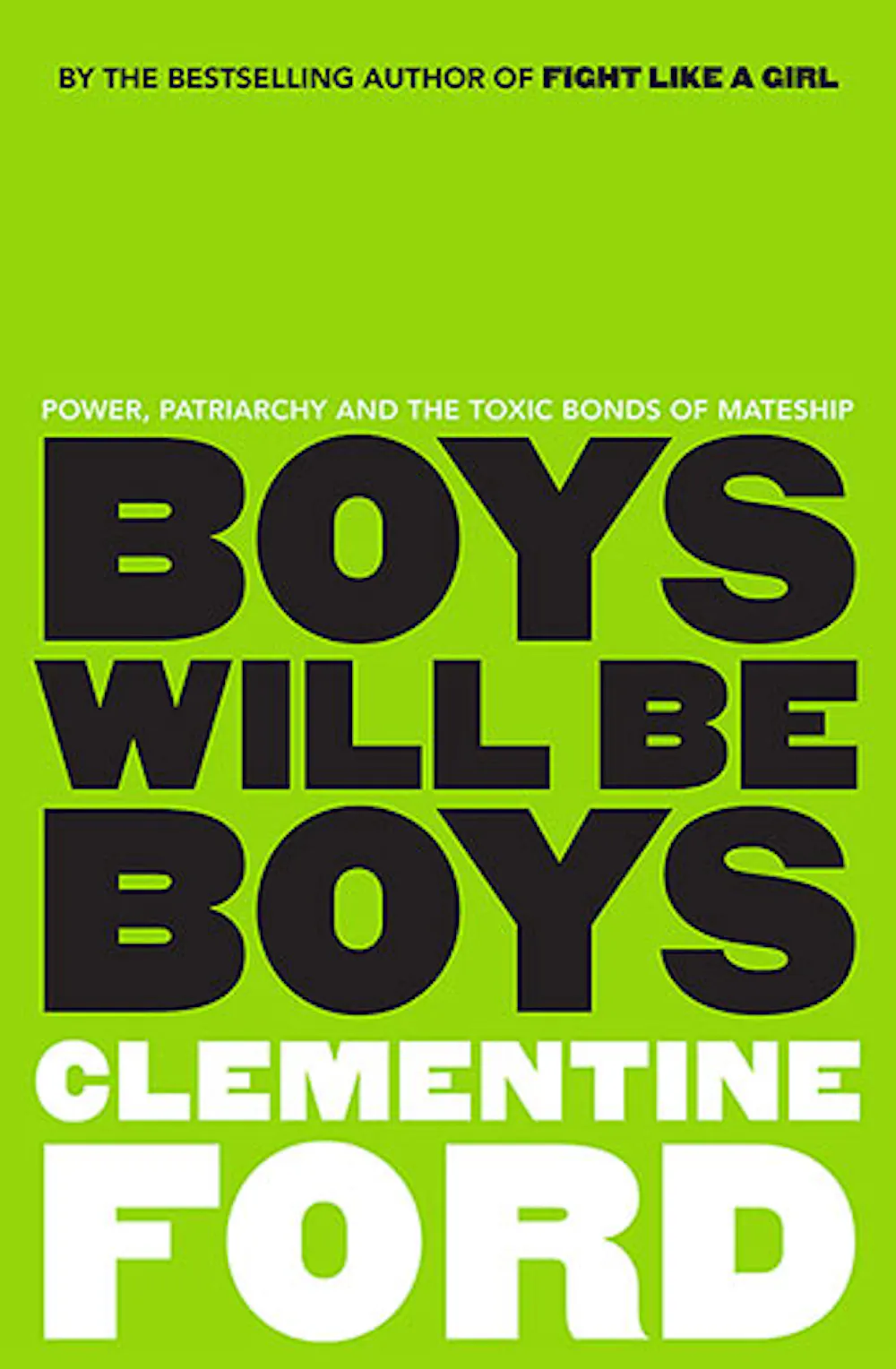
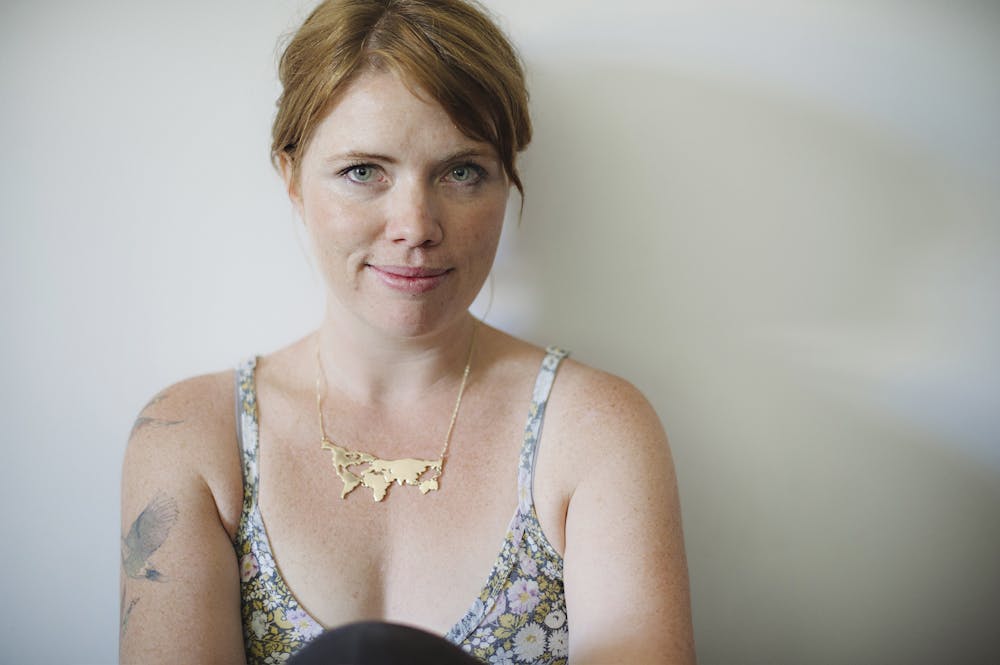
In Boys Will Be Boys, Australia’s most prominent contemporary feminist, Clementine Ford, works toward dismantling the idea that feminism is harming men. Instead, she proposes — as feminists have consistently maintained — that a patriarchal society can be as harmful and destructive for individual men as it can be for women.
Ford considers how “toxic masculinity” is shaped from the moment of a boy’s “gender reveal” to her closing chapter, which – simply and powerfully — lists the names of more than 50 famous men who have been publicly accused of sexual assault and their alleged criminal acts.
She traces how gendered inequalities in the way we socialise children at home and via pop culture directly shape harmful adult behaviours. These include “the embrace of online abuse, rape culture, men’s rights baloney and even the freezing out of women from government and leadership”. Ford sets out to demonstrate not only how “toxic male spaces and behaviours … codify male power and dominance” but also how they serve to protect men from any consequences.
In a chapter on domestic labour, A Woman’s Place, Ford shows how gendered division of housework and childcare informs assumptions about adult roles. In a claim that will no doubt be quoted by many “Angry Internet Men” (as Ford refers to them), she proposes that heterosexual women are better placed living alone and inviting men “into our houses as guests occasionally”.
Her point is not that there is no pleasure to be had for a woman cohabiting with a man. Instead she highlights that managing “the gendered conditions of domestic labour … takes a fuckton of work”. This work happens regardless of whether women are consistently fighting for help with washing the dishes or changing nappies, or have begrudgingly accepted that the unending cycle of housework is their burden to shoulder.
Read more:
Friday essay: talking, writing and fighting like girls
Short of raising a child in the wilderness, far from an internet connection, television signal or cinema complex, children are inducted into gender norms by the popular culture they consume. In her chapter about Girls of Film, Ford reflects on the experience of a 1980s childhood in which the blockbuster films for young people all required girl viewers to imagine themselves in the place of active male heroes.
Unlike girls, boys are not conditioned to identify with girls and women on screen. This, Ford argues, results in the marginalisation of stories about girls, which “are considered niche and peripheral, in the same way stories about people of colour or stories about disability or queerness are”.
We only have to look to the dramatic online overreaction to the news of a female-lead Ghostbusters reboot, which resulted in the stars of the film receiving sexist and racist abuse. This suggests that many men’s inability to see value in “stories about anything other than themselves” is entwined with the devaluation of women themselves.
Clementine Ford
Inevitably, Ford must consider the men who lead these online crusades against the imagined oppression of men. She devotes significant attention to Milo Yiannopoulos, who has become a figurehead of the men’s rights movement. When Leslie Jones, the African-American actress who starred in Ghostbusters, shared some of the abuse she received at the hands of Yiannopoulos and his followers, he accused her of “playing the victim”.
And yet, as Ford identifies, Yiannopoulos resorted to framing himself as a victim when his Twitter account was removed in 2016. In a telling assessment, Ford argues that these men are not united in their “iron-clad fortitude but by extreme fragility, and this is what bonds them together beneath men like Yiannopoulous”.
Read more:
#MeToo is not enough: it has yet to shift the power imbalances that would bring about gender equality
One of the most frustrating modern retorts to any attempt to discuss gendered violence, discrimination and outright sexism is that “#NotAllMen” are responsible for these acts and attitudes. However, as Ford cuttingly observes, women do not need a directive to “look for the goodness in men, because we try our damnedest to find it every day”.
Women already know that not all men are guilty of the brutal sexual assaults, for instance, that Ford details in her interrogation of rape culture. The difference for women is that “we know that any man could be [a threat]”. The magnitude of living with such a gendered power imbalance impacts every woman’s thoughts and movements.
While Ford writes with great humour about the abuse she has received and anti-feminist rhetoric more generally, the overwhelming gravity of a world overcome by toxic masculinity permeates this book.
Margaret Atwood’s famous comment that men are afraid that women will laugh at them, while women are afraid that men will kill them, is no more painfully examined than in discussion of the brutal rape and murder of Aboriginal woman Lynette Daley. One of the killers, in his explanation of events to police, stated: “These things happen … girls will be girls, boys will be boys.”
As Ford rallies us to understand, being a boy need not pose a danger to women nor encompass the harms that patriarchy enacts on men, such as increased risk of suicide or the impact of violence.
With an epilogue comprised of a loving letter to her young son, Ford asks us to imagine a different definition of boyhood, in which being sensitive, soft, kind, gentle, respectful, accountable, expressive, loving and nurturing are no longer framed as incompatible with being a man.
An 18-year-old girl prepares to die to enable the birth of her half-vampire baby. Her spine is broken in the process, and the fanged baby begins to gnaw its way through her stomach before the girl’s husband performs a vampiric Cesarean section. This is a crucial moment in Stephenie Meyer’s Twilight novel series, published from 2005 to 2008.
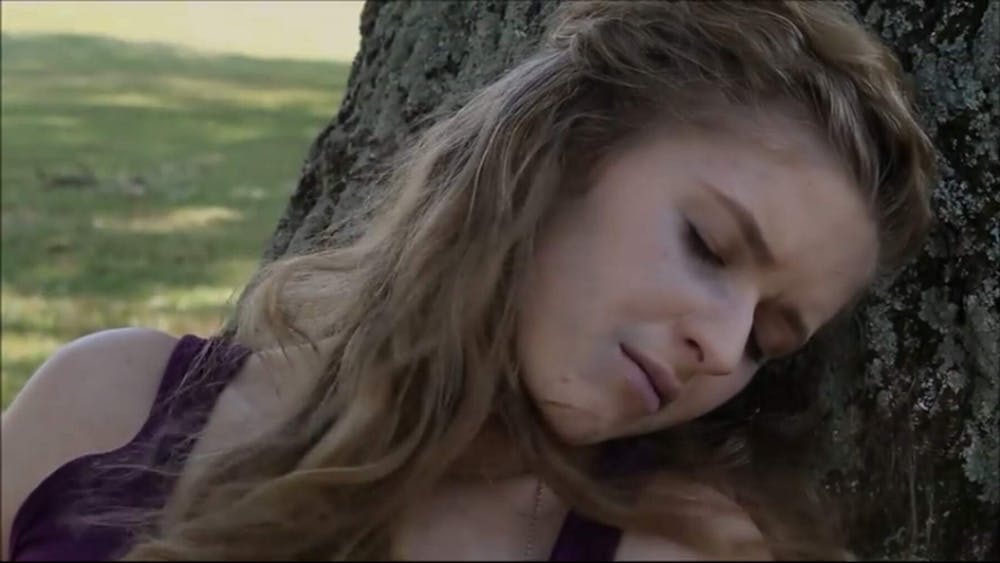
Zoey Deutch in the film Vampire Academy (2014). Angry Films, Kintop Pictures, Preger Entertainment.
Meyer’s books heralded a new, and continuing, wave of Gothic fiction for Young Adult readers, which revisits familiar literary Gothic conventions: ancient, ruined buildings and monstrous supernatural figures like the vampire, werewolf, ghost and witch.
The Gothic romances of the 18th century, such as the novels of Ann Radcliffe, and the enduringly popular Bram Stoker’s Dracula (1897), sought to recreate feelings of terror and horror for an audience of adult readers. Today, however, most Gothic fiction is being published for, and read by, young people. Surprisingly, it has proved to be the ideal genre for exploring the grotesque and frightening aspects of coming of age, and metaphorically representing pressing social issues such as racism and gender inequality.
The phenomenally popular YA genre, targeted at readers between 12 and 18 years old, evolved from realist novels of the 1960s. These books were preoccupied with the struggles of adolescence set against a backdrop of social issues. Now, though, the genre often looks to the supernatural. Beyond Twilight, some of the most popular YA Gothic series also focus on the “lives” of vampires who are protagonists rather than foes.
Richelle Mead’s six-book Vampire Academy (2007-2010), now adapted into a TV series, is about a teenage girl who is a Dhampir (half-human, half-vampire). She becomes entangled in a forbidden romance with her instructor as St Vladimir’s Academy, while learning how to defeat evil vampires named Strigoi.
Ashley Lyn Blair in Vampire Academy: The Officially Unofficial Fan Series (2016). idmb
The YA Gothic revival has also embraced a wide range of supernatural entities. Cassandra Clare’s Shadowhunter Chronicles, a cross-media franchise that includes the Infernal Devices and Mortal Instruments novel series, charges angel-blooded humans with the task of protecting regular humans from a range of supernatural beings.
The Nephilim, or Shadowhunters, are busy controlling demons, warlocks, werewolves, faeries and vampires, but critically, it is their part-supernatural status that enables them to serve as protectors.
The Gothic, and its newer sub-genres like paranormal romance, have a unique resonance with teenagers. They are poised in a transitional space between childhood and adulthood, neither quite embodying the stage they are leaving behind nor fully the thing that they are in the process of becoming. It is unsurprising, then, that they have eagerly embraced the Gothic’s themes of the liminal and the monstrous, as well as its fixation on romance and sex.
Another significant element of the current YA Gothic revival is the emergence of the girl monster. In earlier manifestions of the “female Gothic”, first published in the 18th century by women writers, female protagonists were often courageous, but simultaneously passive and victimised. The plots of the female Gothic reflected the comparative powerlessness of women at the time and their fears about their vulnerability and entrapment within domestic roles and patriarchal society.
In contemporary YA Gothic, girl monsters, who can constitute a threat to others and themselves, disrupt the plotline of male monster and female victim.
Why now?
The most obvious catalyst for the embrace of Gothic conventions in literature for young people is J.K. Rowling’s Harry Potter series. Its popularity signalled a warm embrace of fantasy fiction that confronted the eternal dilemma of the battle between good and evil, charging a child - and later teenage protagonist - with the ability to save the world. While Hogwarts School of Witchcraft and Wizardry was not necessarily Gothic, the Potter phenomenon opened the way for the publication of numerous titles that embraced the possibilities of young protagonists with supernatural abilities.
Read more:
Rethinking Harry Potter twenty years on
Most significantly, Meyer’s Twilight series about human Bella Swan and “sparkling” vampire Edward Cullen, combined this staple figure of Gothic fiction with the teen romance novel. The Twilight novels were bestsellers internationally and the saga was voted into the number one position in Australian book chain Angus & Robertson’s Top 100 Books poll of 2010. The Twilight universe expanded from books into a highly successful film series.
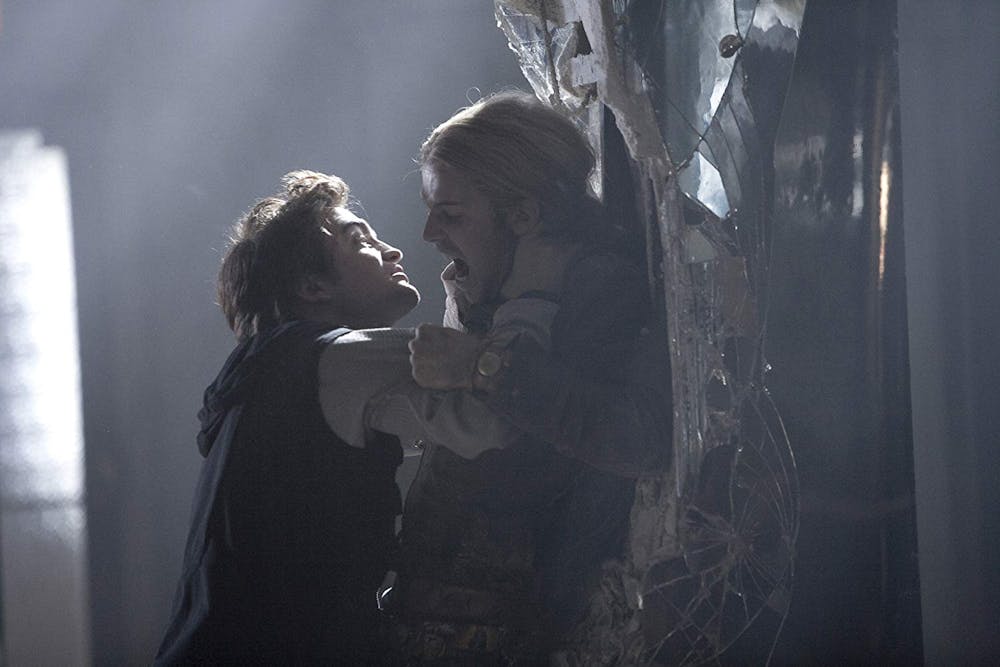
Robert Pattinson and Cam Gigandet in Twilight (2008). Summit Entertainment, Temple Hill Entertainment, Maverick Films.
The Gothic has had several major periods of popularity since its first appearance in 18th-century England, with Horace Walpole’s novel The Castle of Otranto (1764). In each subsequent revival of Gothic fiction, the genre has been reworked and reinvented to address current cultural concerns.
In particular, the monsters that haunt the pages of Gothic novels are transformed with shifting fears and anxieties. In her influential book Our Vampires, Ourselves Nina Auerbach explains that “every age embraces the vampire it needs”, and this comment can be extend to Gothic monsters more generally.
Contemporary YA fiction blurs the line between good and evil. In Gothic novels of the 19th century, monsters were usually wholly “Othered”. A Victorian-era vampire such as Stoker’s Dracula, for instance was depicted as evil, foreign, and frighteningly different to the British human.
Gary Oldman as Count Dracula in the 1992 film version of the Bram
Stoker novel. American Zoetrope, Columbia Pictures Corporation.
But contemporary monsters are no longer necessarily imagined as racially different or set in opposition to the human. Moreover, they are often represented sympathetically, especially in stories told from their perspective.
These include the iZombie comic series, in which the protagonist must eat brains on a monthly basis to survive, and Claudia Gray’s Evernight series, in which the reader is not even aware that the girl protagonist is a vampire for half of the first book. Indeed, as Anna Jackson explains in New Directions in Children’s Gothic, “the monsters have become the heroes” in contemporary children’s Gothic.
The passive heroine
Most Gothic novels for young people contain a romance plot. This is often because the protagonists’ age places them in the transitional zone for entering adulthood, which is demarcated by sexual experience.
Read more:
How long have we believed in vampires?
In a typical YA Gothic novel, such as Twilight, a plot in which a human or monstrous girl protagonist falls for a boy who is not her “type” can dissolve the boundaries between monster and human. These monstrous love interests range from traditional Gothic ones - vampires, werewolves, zombies, ghosts and witches - to newer figures such as fallen angels and faeries. The key challenge to be overcome in these novels is the barriers posed to love by supernatural monstrosity, including the physical dangers to humans, as well as social discrimination about “cross-species” love.
In one of few major studies of teen romance fiction, published almost 30 years ago, Linda Christian-Smith described these novels as a “site of ideological struggles for young women’s hearts and minds”. In particular, she refers to teen romance fiction’s emphasis on heteronormative coupling and motherhood. Little has changed with respect to depictions of sexuality since, despite the YA Gothic’s embrace of diverse human-monster relationships.
Most romances in the genre are heterosexual. They do often emphasise the heroine’s agency through her supernatural abilities and ability to choose between men or move between relationships. However, the human heroines of the Twilight series and Lauren Kate’s Fallen series, in which the heroine becomes drawn to a boy who is a fallen angel, are comparatively indecisive and continue to need rescuing.
Tellingly, Joss Whedon, the creator of the TV series Buffy, The Vampire Slayer (1997-2003), has described Twilight’s Bella as lacking empowerment, overly fixated on her romantic options, and “completely passive”.
Novels with passive human heroines allow the reader to use the fantasy of romance as a temporary escape from real-world gender inequality. Yet they also reinforce its reality for female readers.
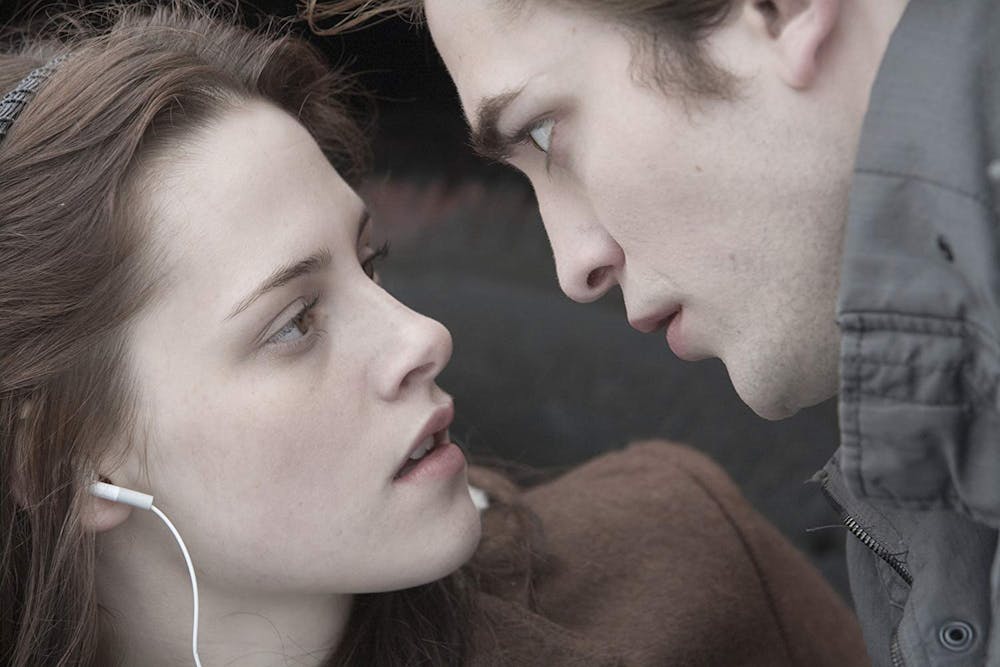
Kristen Stewart (Bella) and Robert Pattinson (Edward) in Twilight (2008). Summit Entertainment, Temple Hill Entertainment, Maverick Films
The girl monster
Supernatural heroines, however, are often able to breach the confines of traditional femininity and become extraordinary in ways that Twilight’s Bella and other human characters cannot. In a number of YA Gothic novels, such as Mead’s Vampire Academy, the protagonists disrupt expectations of feminine behaviour because of their unique, and often poorly understood, supernatural abilities. These special powers become the focus of anxieties about the girls’ coming of age, as they pursue romances that place their broader communities under threat.
The Vampire Academy series was sufficiently popular in 2010 for three of its six titles to sell between 300,000 and half a million copies in hardcover in the US alone, according to Publishers Weekly. However, unlike the Twilight series, on which it likely attempted to capitalise, its protagonist, Rose, is half-vampire, half-human and a monster in her own right. Rose shares a close bond with vampire Lissa, and is driven to break the Academy’s rules in order to save her friend when she is kidnapped, highlighting that girls are also capable of protecting and rescuing people they love.
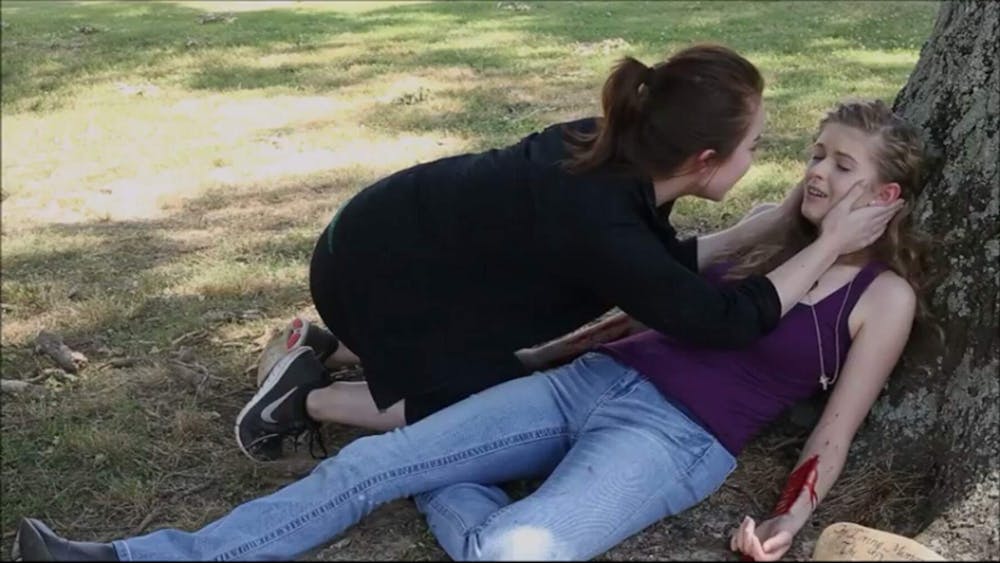
Ashley Lyn Blair (Lissa) and Jennifer Studnicki (Rose) in Vampire Academy: The Officially Unofficial Fan Series (2016). idmb
Vampire Academy positions Rose as a sexual object, particularly in the eyes of a privileged type of vampire (Moroi), who find Dhampir women especially attractive because of racial differences. Rose enjoys her sexuality and dresses to take advantage of it, but this sexuality operates within her definition as a strong young woman:
First they saw my body and the dress. Testosterone took over as pure male lust shone out of their faces. Then they seemed to realize it was me and promptly turned terrified. Cool.
Rose is able to reject unwelcome advances and possesses the physical strength and skills to stand up for herself, suggesting a fantasy of empowerment and equality.
Lissa, meanwhile, thwarts what amounts to an attempted gang rape of a drugged girl. A group of male Moroi students attempt to take advantage of a female feeder (person who permits their blood to be sucked) at a party, “doing a sort of group feeding, taking turns biting her and making gross suggestions. High and oblivious, she let them”.
The supernatural female protagonists in YA gothic novels are responsible for their own safety and protection, yet they also have a responsibility to keep others safe.
These heroines have some romantic and sexual agency in a way that can be considered progressive. However, their desire is also framed as disruptive and dangerous and there is an obsessive fixation on the pursuit of romance above the girl’s own development, education and safety.
In other words, the superficially radical potential of girl heroines with superhuman physical strength, mind-reading abilities, and the potential to kill can merely be a decorative smokescreen for the reinforcement of traditional feminine values.
The good and monstrous within
The recent proliferation of Gothic YA novels is skewed toward a female readership with a focus on girl protagonists, and significant emphasis on their quest for romance. Nevertheless, there are a number of series with boy heroes. For example, Ransom Riggs’ Miss Peregrine’s Home for Peculiar Children (the first book of which was recently filmed by director Tim Burton), focuses on a 16-year-old human boy, Jacob.
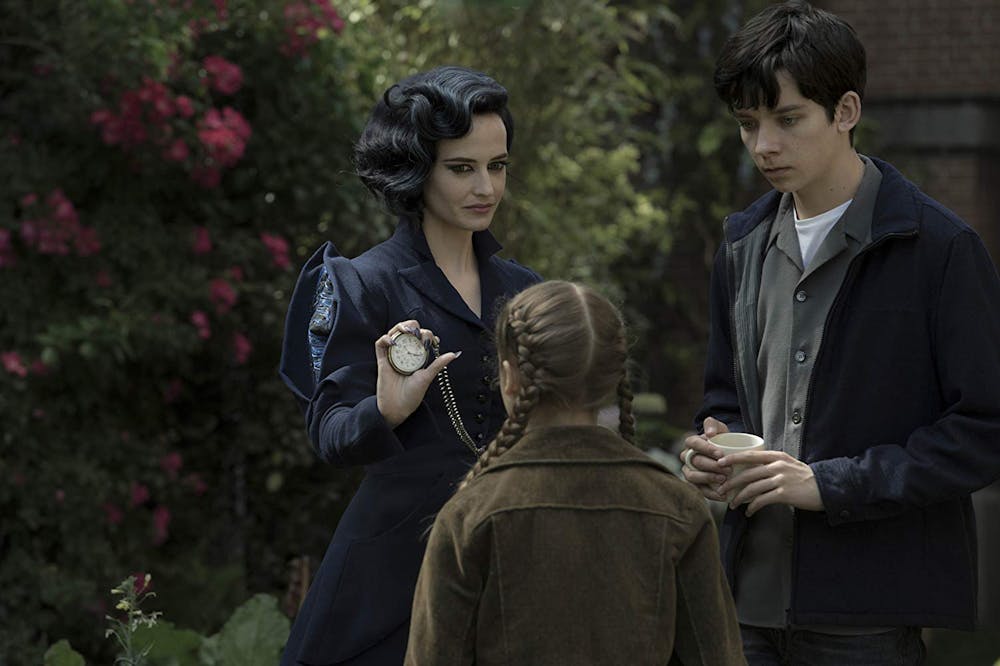
Miss Peregrine's Home for Peculiar Children (2016). Twentieth Century Fox, Chernin Entertainment, TSG Entertainment.
Jacob has inherited an ability that makes him uniquely able to help the supernatural peculiar children of the title, who are threatened by creatures named hollowgasts who are driven to murder peculiar children in order to feed upon their souls. For Jacob, his transition to adulthood is less about romance and more about self-discovery, connections with his ancestors, and finding a way to negotiate his new-found abilities and responsibilities.
In The Gothic Child, Maria Georgieva suggests that the traditional Gothic novel is preoccupied with “the growth and transformation of the child, the crisis of adolescence and the sometimes painful transition into adulthood”. She is referring to the child’s potential to grow into the hero, heroine or villain.
However, the recent surge in YA Gothic fiction takes this fascination with the darker aspects of childhood in a different direction. The girl heroine, in learning to manage the physical and emotional shifts of her development and more complex relationships in romance, can both be a threat and a saviour to others.
The fuzziness of her nature reflects both the liminal status of the teenager and new cultural understandings of the monster, who now more often resembles the typical American teen than an undead Romanian count.
Instead of contemplating a child’s potential to head towards either good or evil, recent Gothic YA acknowledges the possibility of both the good and the monstrous residing in one person.
The "Wonderland" exhibition, a celebration of Alice in Wonderland in visual culture from the Victorian period until today, has been running in Melbourne since May at the Australian Centre for the Moving Image. Shortly after the opening, I took part in a talk about Alice on screen with Alexandra Heller-Nicholas and Dr Dan Golding. The event was live streamed and you can watch the recording here. We work our way through Alices from the silent era through to Tim Burton, and there's plenty of focus on showing excerpts from less well-known films.